
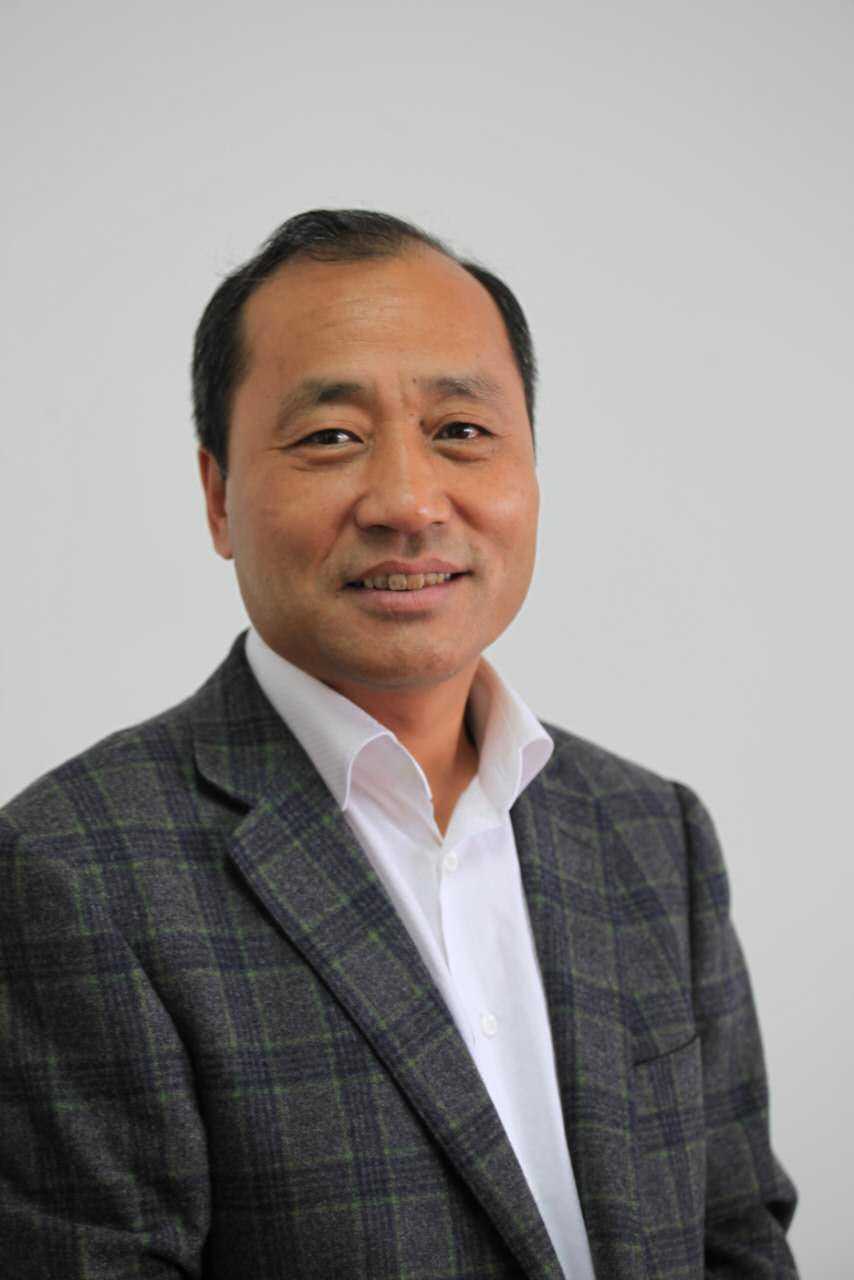
 | Prof. Lining SunSuzhou University, China Lining Sun, Ph.D., Professor, Ph.D. Supervisor, recipient of the Ho Leung Ho Lee Prize, recipient of the National Science Fund for Distinguished Young Scholars, Changjiang Scholar Distinguished Professor, National High-Level Expert, Professor at the State Key Laboratory of Robotics and Systems, Harbin Institute of Technology, Director of the Center for Robotics and Microsystems at Soochow University, Director of the Jiangsu Provincial Innovation Center for Intelligent Robotics, and Chief Expert of the Jiangsu Provincial Key Laboratory of Embodied Intelligent Robot Technology. He served as a thematic expert in the field of robotics and micro/nano manufacturing technology under the Advanced Manufacturing sector of the National 863 Program during the 10th, 11th, and 12th Five-Year Plans, and is the Vice Chairman of the National Technical Committee on Robotics Standardization. He was shortlisted as a candidate for the Chinese Academy of Engineering in 2023 and 2025. His primary research focuses on industrial robots and electromechanical integration equipment, micro/nano manipulation robots and equipment, as well as medical and special-purpose robots. He has presided over more than 20 national-level projects, including the National Natural Science Foundation of China, the National 863 Program, the National 973 Program, and National Major Projects. He has won two National Second Prizes for Technological Invention and Scientific and Technological Progress, and five Provincial/Ministerial First Prizes for Technological Invention and Scientific and Technological Progress. He has published more than 500 papers and holds over 50 authorized national invention patents, with multiple research outcomes successfully commercialized. |
| Prof. Wangzeng KongVice President,Hangzhou Dianzi University, ChinaWanzeng Kong, Vice-President, Professor, and doctoral supervisor. He is an innovative talent of the National WX Program and a leading talent for scientific and technological innovation of Zhejiang Ten-thousand Talents Program. He received his Ph.D. degree from Zhejiang University in 2008. He serves as Deputy Director of the International Joint Research Center for Brain‑Computer Collaborative Intelligence Technology (Ministry of Science and Technology of China), and Director of Zhejiang Key Laboratory of Brain‑Computer Collaborative Intelligence Technology and Applications. He has been continuously listed in the World’s Top 2% Scientists from 2023 to 2025. His honors include the Outstanding Youth Award of Huanao Award for Brain‑Computer Interface in China, Excellent Science and Technology Worker of Chinese Institute of Electronics, and Distinguished Member of China Computer Federation (accounting for 3‰ of professional members). He has presided over and completed numerous research projects, including the National Natural Science Foundation of China (Youth Project, two General Projects, two Key Projects), the Key Special Project for International Science and Technology Innovation Cooperation under the National Key R&D Program, the National International Science and Technology Cooperation Special Project, JWKJW 173 Program Fund, and Zhejiang Provincial Key R&D Program. He is Associate Editor of the SCI journal Cognitive Neurodynamics, an IEEE Senior Member, and Chairman of Hangzhou Association for Artificial Intelligence. He has published more than 100 high-quality academic papers in top conferences including NeurIPS, CVPR, ACL, ACM MM and authoritative journals such as IEEE TPAMI, TNNLS, TIFS, TAFFC, TCDS and TIM in the fields of artificial intelligence and brain-computer interaction. One English monograph was published by Springer. His Google Scholar citations exceed 6900. He has been granted more than 40 Chinese invention patents and 2 US invention patents. His research achievements have won 4 provincial‑ministerial‑level science and technology awards, Silver Award at Geneva International Exhibition of Inventions and Silver Award of International Invention Exhibition. For teaching achievements, he has obtained the Second‑Class National Teaching Achievement Award, the Second Prize of Electronic Information Teaching Achievement Competition of Chinese Institute of Electronics, and the First Prize of Zhejiang Provincial Postgraduate Education Achievement Award. |
| Prof. Binrui WangChina Jiliang University, China After graduating with a doctorate from the Institute of Robotics and Intelligent Systems of Northeastern University in 2005, he joined China Jiliang University and successively held positions such as Vice Dean of the School of Mechanical and Electrical Engineering and Director of the Engineering Training Center. In 2013, he was promoted to professor and went on a visiting scholarship at the University of Tennessee in the United States. Since August 2020, he has served as a member of the university's Party Committee, Director of the Organization Department, Director of the United Front Work Department, Director of the Talent Office, and has been in charge of personnel affairs, laboratory management, and international exchanges. In July 2023, he was appointed as the vice president by the Zhejiang Provincial Government. His research focuses on bionic robots, intelligent control, and machine vision. He has led research projects funded by the National Natural Science Foundation of China and key national research and development programs. His research achievements have been published in authoritative journals such as "IEEE Transactions on Industrial Electronics", and he has won the Zhejiang Provincial Outstanding Natural Science Paper Award. He serves as the deputy secretary-general of the Zhejiang Robot Industry Development Association, is in charge of personnel affairs, laboratory management, and international exchanges, and has promoted the establishment of a youth teacher development channel and a system for the construction of teacher ethics and professional conduct. He has led the establishment of the Precision Measurement and Intelligent Manufacturing Research Institute and conducted research on topics such as intelligent unpacking equipment for customs and urban underground inspection robots. |
| Prof. Jinggang YiIEEE FellowRutgers University, USA Professor Jingang Yi serves as a Professor at Rutgers, The State University of New Jersey. He is also a Peter D. Cherasia Faculty Scholar at Rutgers and the Director of the Robotics, Automation, and Mechatronics (RAM) Lab. Professor Yi has a solid and diverse academic background. He earned his Bachelor's degree in Electrical Engineering from Zhejiang University in 1993, followed by a Master's degree in Precision Instruments from Tsinghua University in 1996. He later pursued his graduate studies in the U.S. at the University of California, Berkeley, where he received an M.A. in Mathematics in 2001 and a Ph.D. in Mechanical Engineering in 2002. His primary research interests lie at the intersection of autonomous robotic and vehicle systems, physical human-robot interaction, mechatronics, and dynamic systems and control. He applies these advanced principles of automation science and engineering to various practical fields, including civil infrastructure, oceanic systems, manufacturing, and rehabilitation robotics. Currently, his lab is engaged in several cutting-edge projects, such as autonomous motorcycles, unstable physical human-robot interaction (upHRI), and autonomous robots for automated non-destructive evaluation of bridge decks. Professor Yi is highly respected in his field. He is a Fellow of the American Society of Mechanical Engineers (ASME) and a Senior Member of the Institute of Electrical and Electronics Engineers (IEEE). Throughout his career, he has been the recipient of numerous prestigious awards, including the 2018 Japan Society for the Promotion of Science (JSPS) Invitational Fellowship for Research, the 2017 Rutgers Chancellor’s Scholars Award, the 2014 American Society of Civil Engineers (ASCE) Charles Pankow Award for Innovation, and the 2010 National Science Foundation (NSF) CAREER Award. Additionally, he has co-authored multiple Best Paper Awards in top-tier international journals and conferences, including IEEE Transactions on Automation Science and Engineering and IEEE ICRA. |


